Programs · Youth Safety & Development
Raising bully‑proof kids.
Safe Kid is Saario Academy’s safety education for children — typically in preschool and in elementary school. It teaches them to be careful, without teaching them to be afraid.
01 — The promise
Careful,
not afraid.
“Let us not create unnecessary fear in children. They basically have to trust the adult society of which they will later be a member of. However they must be taught to be careful.”
// from the Safe Kid instructor guide
02 — Part of the Academy
A Saario Academy program — with its own instructor curriculum.
Safe Kid is one of the Academy’s named programs, not an add-on to adult training. It has its own instructor course, its own written curriculum, and the same standard of safety and discipline that runs through everything the Academy teaches.
 // saario academy · safe kid program
03 — For whom
For children — and for their parents.
The children in the program are typically in preschool and in elementary school. The method is just as clear about the second half of the work — the adults at home.
Parents as partners
“Without the cooperation of the parents, our work will not be effective!”
“Consistency and demonstrating personal integrity are the most effective educational tools.”
// from the Safe Kid instructor guide
04 — What your child learns
Safety messages. One habit of care.
The curriculum is built on a set of safety messages — the everyday dangers first, then the harder subjects, always at the child’s level.
01Road & transport safety
02Falls
03Poisoning
04Fire
05Safe near water
06Internet safety
07Psychological manipulation
08Personal security
+ first aid
The rescue call — 112.
First-aid education is part of the program — starting with the European rescue number. Even preschoolers can learn it.
Escape first
“Aggressiveness should also be avoided even at the price of damaging our pride. There’s no shame in getting out of this situation. Teach children to find an escape route in these situations.”
// from the Safe Kid instructor guide
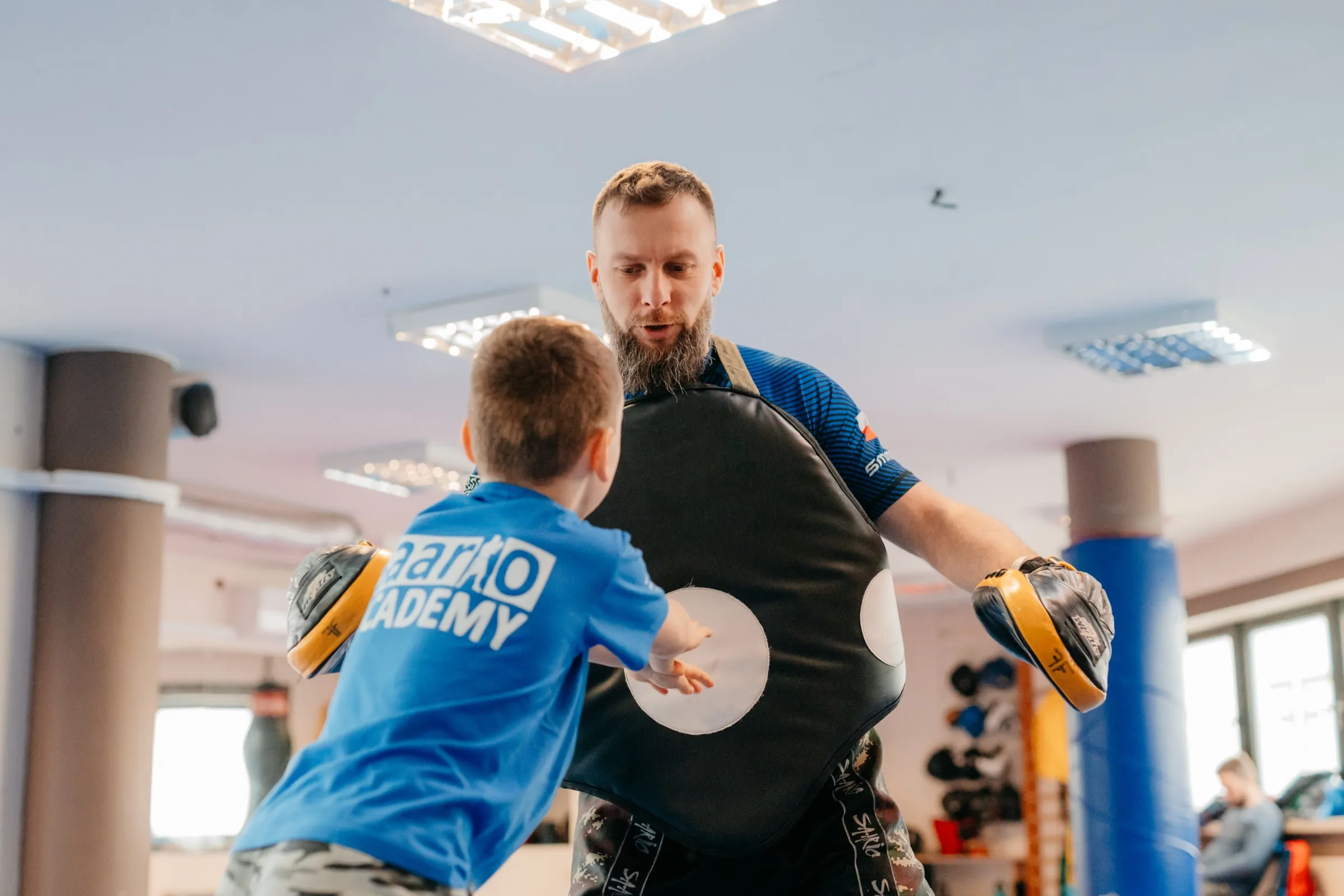
Learning to say no
“It’s a good game to teach children to say NO in different situations!”
// from the Safe Kid instructor guide
05 — The method
Taught as play. Grounded in pedagogy.
Safe Kid uses very little lecture-style, frontal teaching. The rules are communicated playfully, with a lot of activity and movement — quizzes, games, conversations, situational play.
The spine of the curriculum is a book: Safety of our children — educational guide for Safe Kid instructors, written for the Academy by Dr. Jenő Benkovics, pedagogy specialist psychologist (2020).
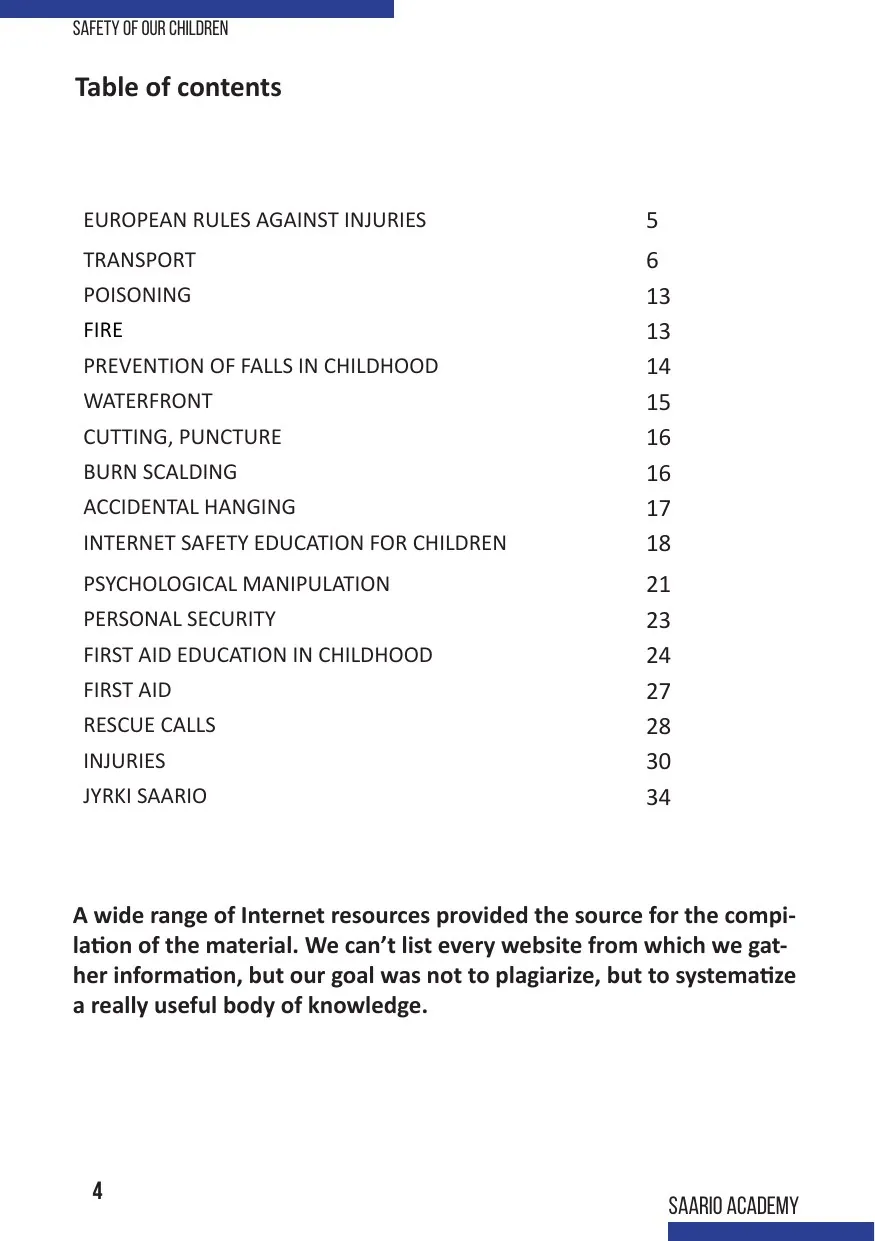
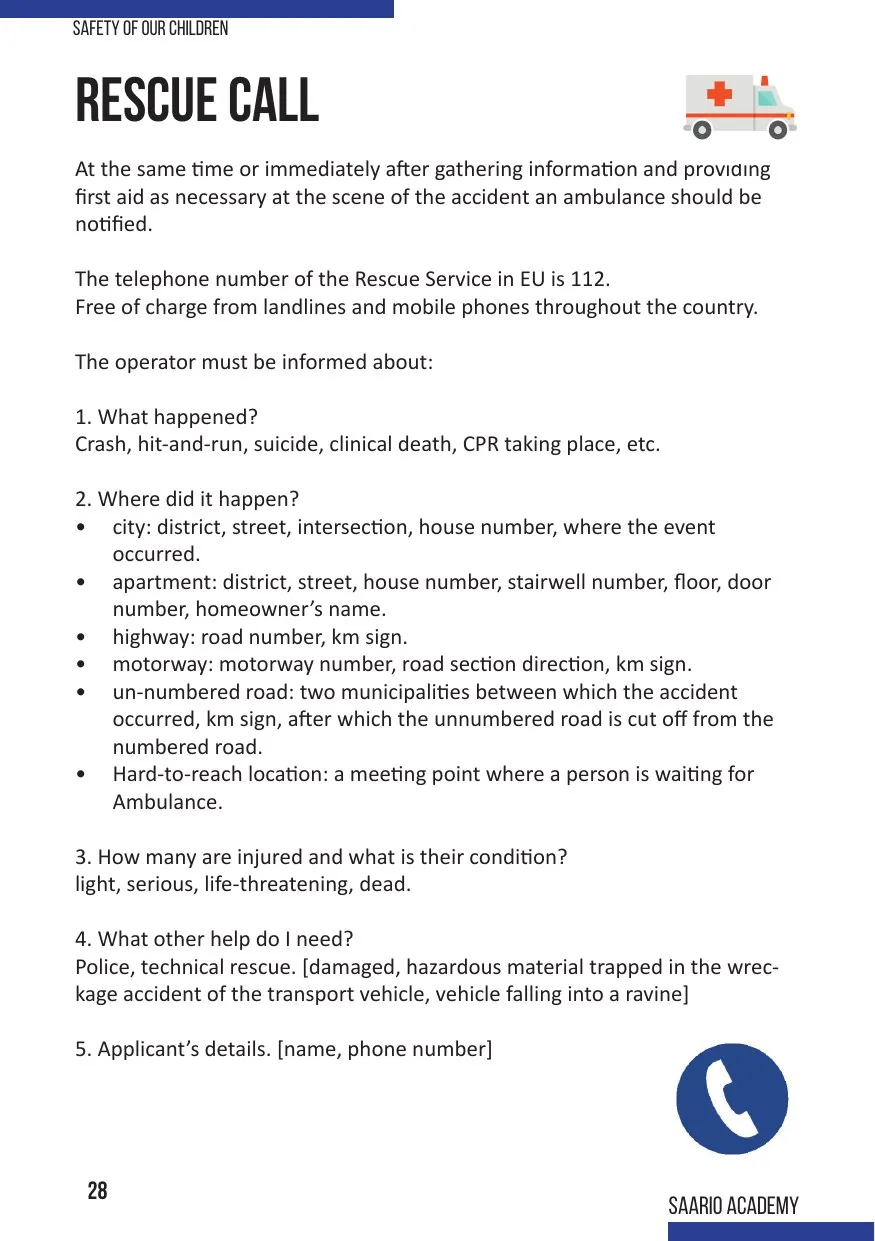
// pages from the safe kid instructor guide — the program’s own material
06 — Who teaches
Trained in child development and pedagogy — not just techniques.
The Safe Kid instructor course covers developmental psychology by age band, coach communication, training theory and injury prevention — so training asks of a child only what a child of that age can actually give.
3–6Kindergarten
6–10Elementary
10–12Pre-adolescence
12–18Adolescence
07 — The Academy way
Coordinator
Like every Saario Academy program, Safe Kid connects to the Academy through its program coordinator — your club is the door.
Records
Progress is kept the Academy way: examination results are officially recorded in official logbooks and passports.
08 — On the 2026 calendar
Safe Kid, this summer.
Open for everyone
International Safe Kid Camp
Ten days of the Safe Kid program, in camp form — open for everyone.
Only for instructors
Safe Kid L1 Course
The course where new Safe Kid instructors are trained.
09 — Questions parents ask
Before you ask the club.
What age can my child start? +
The children being educated via this program are typically in preschool and in elementary school. For groups and start ages, ask your club.
Will it make my child aggressive? +
No — the program teaches the opposite, in its own words:
“Aggressiveness should also be avoided even at the price of damaging our pride. There’s no shame in getting out of this situation.”
Children are taught to find an escape route first. Physical technique is a last resort, not the point of the program.
Do parents take part? +
Yes — the method is built on it: “Without the cooperation of the parents, our work will not be effective!” Expect to be involved.
Is it self-defence training? +
It is broader than that. Safe Kid is safety education — road and transport safety, falls, poisoning, fire, water, internet safety, psychological manipulation, personal security — plus first-aid education. All of it taught as play.
What about teenagers? +
Teenagers train in Safe Teen — the Academy’s separate program for that age. See below.
For teenagers
Safe Teen
The Safe Kid guide draws the line itself: “The issue of the safety of teenagers and young adults is much broader due to their age and differs significantly from early childhood.” That is why teenagers have their own program — Safe Teen.
For groups, ages and schedules, ask your club.